Tampilkan postingan dengan label Fat. Tampilkan semua postingan

Why (LDL particle) size matters.

Having gone through the math(s) with several people, I thought I'd stick it in a blog post for posterity.
I know that this is a diagram of a chylomicron, but bear with me!

Cholesterol synthesised in the liver is exported in LDL particles. The more cholesterol that's synthesised, the more particles there need to be to carry it.

∴ LDL-P (particle number) ∝ LDL-C (total amount of cholesterol)

The particles are roughly spherical with a very thin wall (consisting of a phospholipid mono-layer, the yellow wiggly lines with a green end bit in the above diagram).

Volume of a sphere = 4/3 * π * r3, where r = half the diameter.

If there's a 10% reduction in LDL particle size, the volume reduces to 0.729, relative to the original size. Therefore, to carry the same amount of cholesterol requires 1/0.729 = 1.37 times more particles, which is a 37% increase in the number of LDL particles, relative to the original size.

∴ LDL-P (particle number) ∝ 1/LDLsize3

As it's LDL particle number that determines the infiltration of LDL cholesterol into the media of artery walls, it's advisable to keep cholesterol synthesis to a minimum by keeping fat intake to a reasonable level * (i.e. not Nutritional Ketosis level) and keeping LDL particle size to a maximum by keeping sugars & fast starches intake to a reasonable level*.

Before someone asks, what I mean by a reasonable level is a level that is burned by the body without having a chronic excess. An acute excess can be stored, provided that mean intake is less than mean burning.
How COULD I write a post about LDL-P and forget to include THIS?

Bray et al shows that a calorie *is* a calorie (where weight change is concerned).

Continued from Everyone is Different, Part 3.

EDIT: I made an error in stating that all of the extra calories came from fat, in the fat overfeeding phase. Thanks to commenter CynicalEng for pointing that out. It doesn't change the conclusion at all.

At 01:17 on 6th June, I was told during a Facebook discussion:-
"Nigel Kinbrum - read this please.
Bray, et al. Shows that a Calorie is Not a Calorie and that Dietary Carbohydrate Controls Fat Storage.
Perhaps you'll learn something from a real expert who teaches metabolism to medical students at the largest medical school in the country."

So I did.

At 02:22, I replied:-
"Thanks for that. I read Feinman's blog post about Bray et al http://www.ncbi.nlm.nih.gov/pmc/articles/PMC3777747/ some time ago.
There's a fundamental error in Feinman's analysis. As LeonRover pointed out in his comment http://feinmantheother.com/.../bray-et-al-shows-that.../...
In Diets:- "Absolute carbohydrate intake was kept constant throughout the study."
Also, in COMMENT:- "The extra calories in our study were fed as fat, as in several other studies, and were stored as fat..."
Oh, whoops! That may be why it was rejected by the editor."

Here's Figure 6 from Bray's study.

Some Definitions:-

LBM = Lean Body Mass
FM = Fat Mass = Body Fat


Weight change = (LBM change + FM change)


Weight change varies from ~+3.5kg (@ +2,500kJ/d) to ~+9.1kg (@ +5,900kJ/d).

(Maximum weight increase)/(minimum weight increase) = 2.6
(Maximum kJ/day increase)/(minimum kJ/day increase) = 2.36

∴ A calorie *is* a calorie (where weight change is concerned) ± some inter-personal variation.
Insufficient protein can result in LBM loss (this is bad).
As LBM has a lower Energy Density (~400kcals/lb) than FM (~3,500kcals/lb),  LBM loss can increase weight loss, when in a Caloric Deficit.
See The Energy Balance Equation, for a simple explanation, and The Dynamics of Human Body Weight Change, for an incredibly complicated one!


I was rather chuffed when Alan Aragon left the following comment at 04:34:-
"Nigel is correct. From Bray et al's text:
"The extra calories in our study were fed as fat, as in several other studies [33,34], and stored as fat with the lower percentage of excess calories appearing as fat in the high (25%) protein diet group. The higher fat intake in the low protein group probably reduced nutrient absorption (metabolizable energy) relative to the other groups and this would have brought the intake and expenditure closer together in this group.""

Feinman has deleted his blog post. However, his post I Told George Bray How to do it Right is still there. I believe that Dr. George A. Bray M.D. sort-of did it right.

Dr. George A. Bray used a "weight maintenance formula" in all three groups for the weight maintenance phase. He then changed the formula in all three groups to low-P, med-P and high-P formulas, for the fat overfeeding phase. Carbohydrate grams remained constant in all three groups for all phases, but additional fat grams were fewer in the high-P group than in the low-P group, for the fat overfeeding phase.

I would have used the low-P, med-P and high-P formulas for the weight maintenance phase and for the fat overfeeding phase, to equalise the additional fat grams in all three groups.

Lipoproteins & apolipoproteins: E, by 'eck.

In December 2008, I wrote about Cholesterol And Coronary Heart Disease , where I used a limousine metaphor to describe how cholesterol & fat are transported around the body. Here's a diagram of a chylomicron lipoprotein "limousine". Chylomicrons transport dietary fat (triglycerides) & cholesterol from the gut to the liver & other tissues. As there's much more dietary fat than dietary cholesterol, the contents are mostly fat.
A chylomicron. T=Triglyceride C=Cholesterol. From http://en.wikipedia.org/wiki/Lipoprotein

The lipoprotein "limousines" vary a lot in size.
(a) VLDL (b) chylomicrons (c) LDL (d) HDL. 
From http://healthcorrelator.blogspot.co.uk/2011/11/triglycerides-vldl-and-industrial.html

Apolipoproteins are the "chauffeurs" which determine to where lipoproteins transport stuff.
Apo A is found mainly on HDL, which transports fat & cholesterol from tissues to the liver.
Apo B is found mainly on LDL, which transports cholesterol from the liver to tissues.
Apo C is found on HDL when fasted, but moves to chylomicrons & VLDL when fat is eaten.
Apo D is found mainly on HDL and is is associated with an enzyme involved in lipoprotein metabolism.
Apo E is found mainly on chylomicrons & IDL and transports lipoproteins, fat-soluble vitamins, and cholesterol into the lymph system and into the blood. In the CNS, Apo E transports cholesterol to neurons. Defects in Apo E result in hyperlipidaemia , cardiovascular & neurological diseases, and is the E referred to in the title.

There's also Apo H, which is a β-glycoprotein involved in the binding of cardiolipin. It has nothing to do with the above lipoproteins.

Defending the indefensible: Gary Taubes and *that* statement about gluttony.

Here's another "video" (it has sound and static images only). As I haven't learned how to embed a YouTube video that starts at a specific time, here's a link to it and a picture of it:- Gary Taubes' "Why We Get Fat" IMS Lecture On August 12, 2010 (Part 8 of 8), starting at 8 minutes and 8 seconds in.

To quote: "You can basically exercise as much gluttony as you want, as long as you're eating fat and protein."

I was told that Taubes was being ironic i.e. he was joking. I call bull-shit on that, for the following reasons.

1) You don't joke about something as important as diet, in a video that's likely to be heard by many people.

2) If you're foolish enough to joke about something as important as diet, you make 100% certain that listeners know that you're joking, by stating in the very next sentence that the preceding sentence was a joke. Taubes didn't do that.

3) I didn't hear chortling or any other audible clue that Taubes was joking. Did you?

I therefore conclude that the person who made the statement that Taubes was being ironic, is hearing (and seeing) the world through "cognitive bias" Weird Filters , resulting in her hearing what she wants to hear. Sorry!

Metabolic Inflexibility: What it really means.

Here's a picture from Metabolic Flexibility and Insulin Resistance.

The Metabolically-Inflexible (MI) & Insulin Resistance

Here's another picture.
Fig 2. ● = Metabolically-Flexible (MF). ○ = Metabolically-Inflexible (MI).
Salient points:
1) Excess serum FFA a.k.a. NEFA is bad.
2) Respiratory Quotient (RQ) a.k.a. Respiratory Exchange Ratio (RER) changes due to dietary changes are more sluggish in the MI than in the MF.
3) Under Insulin Clamp conditions, RQ/RER is lower in the MI than in the MF, due to impairment of glucose oxidation and non-oxidative glucose disposal.

I have posted this because of Danny Roddy's post Is Supplemental Magnesium A Surrogate For Thyroid Hormone? , which leads onto A Bioenergetic View of High-Fat Diets.

In the first article, Danny Roddy writes:-
"Additionally, taking magnesium while actively engaging in a diet or lifestyle that reduces the respiratory quotient (e.g., high-fat diet, light deficiency, excessive exercise) seems pretty silly. For example, as a rule, diabetics have a reduced respiratory quotient (Simonson DC, et al. 1988), tend to have higher levels of free fatty acids or NEFA (Kahn SE, 2006), and are often deficient in magnesium (De Valk HW, 1999)."

The second sentence (diabetics have a reduced respiratory quotient...and are often deficient in magnesium) seems to contradict the first sentence (...taking magnesium while actively engaging in a diet or lifestyle that reduces the respiratory quotient seems pretty silly).

Simonson DC, et al. 1988 is Oxidative and non-oxidative glucose metabolism in non-obese type 2 (non-insulin-dependent) diabetic patients.
"In conclusion, during the postabsorptive state and under conditions of euglycaemic hyperinsulinaemia, impairment of glucose oxidation and non-oxidative glucose disposal both contribute to the insulin resistance observed in normal weight Type 2 diabetic patients. Since lipid oxidation was normal in this group of diabetic patients, excessive non-esterified fatty acid oxidation cannot explain the defects in glucose disposal."

Impaired glucose oxidation with normal lipid oxidation lowers RQ/RER. Therefore, lower RQ/RER must be bad, right? Wrong. From the above study:-
"...euglycaemic insulin clamp studies were performed..."
Remember Salient point 3)? Simonson DC, et al. 1988 is an insulin clamp study, the results of which don't apply to free-living people (who aren't insulin clamped).

See also Determinants of the variability in respiratory exchange ratio at rest and during exercise in trained athletes. RER/RQ increases & decreases with increases & decreases in exercise intensity. This is Metabolic Flexibility (MF). Sorry, Danny.

Fructose: this may blow your mind.

Hat-tip to Beth@WeightMaven for posting a link to this.
 Nicked from sodahead.com
Watch the following video.


On burning, storing and recomposing.

Burning

I couldn't resist!


On my adventures around the interwebs, I've noticed the following:- "Humans aren't Calorimeters. Therefore calories are irrelevant to humans." While I agree with the first sentence, I don't agree with the second one.

Calorimeters burn (oxidise) foods at high temperatures with a flame using oxygen, which produces carbon dioxide, water (depending on what's being burned) & heat energy.

Humans burn (oxidise) foods at 37ºC with enzymes , charge transporters etc using oxygen, which produces carbon dioxide, water (depending on what's being burned), mechanical energy & heat energy.

As both oxygen & carbon dioxide are gases, these can be measured by a respiratory gas analyser, to establish the rate of burning and what's being burned at any instant. See It's all in a day's work (as measured in Joules). When resting, burning occurs at a rate of ~1kcal/minute and, as it's measured while fasted, ~0.11g/min of fat is burned, & ~0.01g/min of carbohydrate is burned. Also note that a lot of mechanical energy can be produced, which can increase the rate of burning by a factor of seventeen.

In conclusion, humans burn (oxidise) foods, though not with a flame, and they can produce mechanical energy in addition to heat energy. The rate of burning and what's being burned at any instant can be measured.


Storing

When we eat food, it's digested and absorbed. As a digested meal is absorbed, it appears in the blood as glucose, triglycerides & amino acids. These then disappear from the blood due to burning and storage. See Extended effects of evening meal carbohydrate-to-fat ratio on fasting and postprandial substrate metabolism.

Figure 1 shows the effects of a 100g Oral Glucose load or a 40g Oral Fat load on blood glucose level over a period of 360 minutes. Note that subjects are resting during the 360 minutes. As the 100g Oral Glucose load produces a large insulin response (See Figure 2), fat-burning temporarily stops. Therefore, the ~1kcal/minute resting burning rate is derived 100% from carbohydrate. Therefore, the carbohydrate-burning rate is ~0.25g/min. At this rate, it would take ~400 minutes to burn 100g of glucose. However, it actually takes ~180 minutes for blood glucose level to fall from maximum to minimum. Therefore, some of the glucose from the Oral Glucose load is stored (mostly as glycogen in muscles and liver).

Figure 3B shows the effects of a 100g Oral Glucose load or a 40g Oral Fat load on blood triglyceride (fat) level over a period of 360 minutes. Note that subjects are resting during the 360 minutes. As the 40g Oral Fat load produces no significant insulin response (See Figure 2), fat-burning is unaffected. Therefore, the fat-burning rate is ~0.11g/min. At this rate, it would take ~364 minutes to burn 40g of fat. However, it actually takes 180 to 240 minutes for blood triglyceride (fat) level to fall from maximum to minimum. Therefore, some of the fat from the Oral Fat load is stored (as fat in adipocytes), even though there is no significant insulin response.

Therefore there are times when stuff is stored (anabolism) and there are times when stuff is withdrawn from stores (catabolism). If more stuff is stored than is withdrawn over a period of time, weight goes up, and vice-versa.


Recomposing

After doing intense exercise e.g. sprinting, resistance training with weights etc, muscles become very sensitive to insulin. Therefore, if intense exercise is done just before stuff is stored, amino acids & glucose are preferentially stored in muscles rather than adipocytes. This increases muscle mass relative to fat mass.

If non-intense exercise is done at times when stuff is withdrawn from stores, this maximises the amount of fat withdrawn from adipocytes and minimises the amount of amino acids withdrawn from muscles. This decreases fat mass relative to muscle mass.

It's therefore possible to increase muscle mass at certain times and decrease fat mass at other times, while keeping overall mass relatively constant i.e. it's possible to gain muscle and lose body-fat without being in an overall caloric deficit. See Body Recomposition.

Reasons to get off low-fat diets...

Part 1. Increased risk of Coronary Heart Disease due to a lack of gamma-tocopherol in the diet. See Antioxidant state and mortality from coronary heart disease in Lithuanian and Swedish men: concomitant cross sectional study of men aged 50.

See 300 foods highest in Gamma Tocopherol per 100g serving. Low-fat dieters are discouraged from eating foods high in fat. There is no gamma-tocopherol in most Vitamin E supplements. There is gamma-tocopherol in nuts & seeds. Only use Vitamin E supplements that contain mixed tocopherols.

Ditto for beta-carotene, found in coloured veggies and poorly absorbed without dietary fat.
Ditto for lycopene, found in tomatoes and poorly absorbed without dietary fat.


Part 2. Increased risk of tooth decay due to a lack of Vitamin K2. If you listen to Denise Minger's talk, starting at 8 minutes in, she discusses her poor oral health at a young age brought on by a lack of Vitamin K2. Richard Nikoley also discusses the effect of Vitamin K2 on his oral health.

See Vitamin K.


Part 3. Increased risk of gallbladder disease when losing weight. This applies to people (particularly Fair Fat Females in their Forties) who are losing weight rapidly, as this concentrates cholesterol in their bile. I find it rather odd that some people are obsessed with doing exercise, but they fail to exercise their gallbladders by eating at least 5 grams of fat in a meal.

See The Protein-Sparing Modified Fast (PSMF).

It's all in a day's work (as measured in Joules) Part 2.

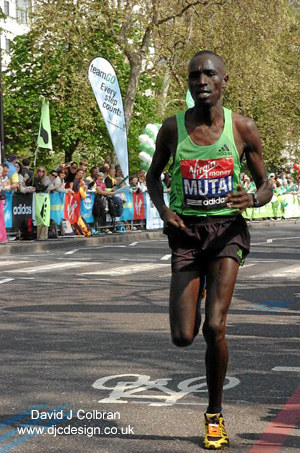
Are you as aerobically-fit as this bloke?

Emmanuel Mutai made it a Kenyan double after winning the Virgin London Marathon in a new course record. Mutai's time of 2:04.38, beats the previous best of 2:05.10 set by Samuel Wanjiru in 2009 and also the fifth-fastest time ever.

I'll take it that's a "no", then.

Elite marathon runners have optimised their metabolisms to use the minimum possible amount of muscle glycogen as fuel. Muscle glycogen storage is limited to ~1,680kcals-worth (~420g of carb)*.
Supercompensation (depletion followed by 3 days of carb-loading) can increase this figure to ~720g*.
Fat storage can amount to ~35,000kcals-worth (~10lb of fat), even in a skinny Kenyan like Mutai.

A blogger called Thor Falk took the data from It's all in a day's work (as measured in Joules) and plotted it as a graph in Fat vs carb burning – a N=1 chart. Here's the graph:-

Even a super-fit Kenyan like Mutai burns some carbs when running at ~12.5 miles per hour. The less fit that somebody is, the more the first corner in the blue plot moves down and to the left. This results in more carbs being burned at energy consumption levels more than the first corner. This depletes muscle glycogen stores faster, resulting in "hitting the wall" (running out of muscle glycogen) sooner.

Muscles that are depleted of glycogen are more insulin-sensitive than muscles that have more glycogen, therefore the less aerobically-fit somebody is, the sooner their muscles become insulin-sensitive when they exercise.

*Assuming 20kg of muscle (Lore of Running P104)

It's all in a day's work (as measured in Joules)

The title is from the "Physics Man" sketch on The Now Show. Work is another word for energy and there are two different units for it.

The calorie (cal) is the amount of energy required to heat 1g of water by 1°C. This is a tiny amount of energy. The dietary Calorie (Cal) = 1,000cal = 1kcal.

The Joule (J) is the SI unit of energy. 1J = 1kg*m^2/s^2.
1Joule/sec = 1Watt (W).

1kcal = 4.186kJ.

At rest, an average human body uses ~1kcal/min = ~4,186J/min = ~69.8J/sec = ~69.8W.

The brain uses ~5g of glucose/hour = 18.75kcal/hour (1g of carb = 3.75kcals, usually rounded-up to 4) = 78487.5J/hour = ~21.8W.

The heart uses ~10W. The liver, kidneys, gut and lungs run continuously so they use energy all of the time.

Skeletal muscle uses a variable amount of energy using a variable proportion of fuels, depending on what you're doing with it. A chap called Steve sent me a spreadsheet of results in 2004 when he underwent a metabolic test on a stationary bike while breathing through a respiratory gas analyser, which calculated kcals burned and fuel usage by measuring Respiratory Exchange Ratio (RER).

At~1kcal/min (resting), he burned ~95% from fat (~0.11g/min), ~5% from carbs (~0.01g/min).
At 2kcal/min (12% max), he burned 100% from fat (0.22g/min), 0% from carbs (0.00g/min).
At 3kcal/min (18% max), he burned 100% from fat (0.33g/min), 0% from carbs (0.00g/min).
At 4kcal/min (24% max), he burned 99% from fat (0.44g/min), 1% from carbs (0.01g/min).
At 5kcal/min (29% max), he burned 48% from fat (0.27g/min), 52% from carbs (0.69g/min).
At 6kcal/min (35% max), he burned 62% from fat (0.41g/min), 38% from carbs (0.61g/min).
At 7kcal/min (41% max), he burned 58% from fat (0.45g/min), 42% from carbs (0.78g/min).
At 8kcal/min (47% max), he burned 46% from fat (0.41g/min), 54% from carbs (1.15g/min).
At 9kcal/min (53% max), he burned 42% from fat (0.53g/min), 58% from carbs (1.39g/min).
At 10kcal/min (59% max), he burned 44% from fat (0.49g/min), 56% from carbs (1.49g/min).
At 11kcal/min (65% max), he burned 38% from fat (0.46g/min), 62% from carbs (1.82g/min).
At 12kcal/min (71% max), he burned 41% from fat (0.55g/min), 59% from carbs (1.89g/min).
At 13kcal/min (76% max), he burned 37% from fat (0.53g/min), 63% from carbs (2.18g/min).
At 14kcal/min (82% max), he burned 30% from fat (0.47g/min), 70% from carbs (2.61g/min).
At 15kcal/min (88% max), he burned 14% from fat (0.23g/min), 86% from carbs (3.44g/min).
At 16kcal/min (94% max), he burned 0% from fat (0.00g/min), 100% from carbs (4.27g/min).
At 17kcal/min (100% max), he burned 0% from fat (0.00g/min), 100% from carbs (4.53g/min).

Over a wide range of intensities, the number of grams of fat Steve burned/min was fairly constant.

Note that 17kcals/min = 1186.6W, or 1.19kW. This level can be maintained for only a few seconds, as carbs are burned both aerobically and anaerobically, which exhausts PhosphoCreatine stores in muscles and also causes an accumulation of lactate in muscles. See Why do muscles hurt after exercise?

Muscle mass is very metabolically-active compared to fat mass, as one pound of fat mass burns only about 2kcal a day. See also Dissecting the Energy Needs of the Body – Research Review

Here's another Physics Man.

Ghrelin, the other "in"

Having just written about Leptin, it's Ghrelin's turn now. When your stomach is empty, serum ghrelin level is high and when your stomach is full, serum ghrelin level is low. Interestingly, high serum ghrelin has a beneficial effect on the hippocampus (responsible for learning stuff) so do your studying when you're hungry!

As a full stomach reduces serum ghrelin and thus reduces appetite, anything that keeps the stomach full for longer reduces appetite for longer. This is where enterogastrones come in. The most useful one in terms of appetite control is cholecystokinin, the secretion of which is stimulated by proteins & fats. This is one reason why diets high in proteins & fats keep you full for longer. Another useful filler is fibre/fiber, of course. As shown on the BBC programme "The Truth about Food", blending a meal with water or some other low-calorie liquid like soup also slows stomach emptying.

Finally, sleep deprivation raises ghrelin so I must try harder to spend less time on my computer and get some shut-eye.

I have a theory.

I was keeping this theory a bit quiet as it contradicts Gary Taubes , Michael R Eades & Richard D Feinman and Eugene J Fine.

Please note: This post is not criticising low-carb, high-fat diets in any way, shape or form. I'm just trying to point out that if someone on a low-carb, high-fat diet pigs-out on roast lamb/pork/duck etc, they may not lose as much body fat as they expected & they may even gain some.

I don't particularly want to start a shit-storm, but as I am in the "a calorie is a calorie" (when it comes to weight gain/loss) camp and a lot of the people whose blogs I link to aren't, I need to go public. So, here it is, copied & pasted from the comments section of Diet, Carbs, Fat and Weight Loss, corrected for spelling.

"I would like to propose a theory which explains how fat cells can acquire glucose (& thus correct a deficiency in glycerol-3-phosphate) even when serum insulin level is basal.

Consider muscle cells undergoing anaerobic activity:-

Anaerobic activity is very inefficient and uses pyruvate at a very rapid rate. A deficiency in pyruvate up-regulates all of the up-stream processes, including Glu-T4 transporters so as to maximise pyruvate production.

This explains why resistance training with weights greatly increases muscular insulin sensitivity and why resistance training with weights when depleted of muscle glycogen can cause precipitous drops in blood glucose level.

Ditto for glycerol-3-phosphate in fat cells. In this case, blood glucose level is maintained by the liver & kidneys, which convert the glycerol backbone of triacylglycerols (fats) and other substrates such as lactate, pyruvate & glucogenic amino acids into glucose."


In plain terms what this means is that, like muscle cells, fat cells can acquire as much glucose as they need, independently of carbohydrate intake.

Therefore, if an excess (beyond what the body is burning) of dietary fat is eaten, this can be stored in fat cells even if serum insulin level does not increase.

There. I've said it. I expect comments! Moderation is enabled. All comments that are free from ad-hominem, straw men & other logical fallacies will be published.

As a lot of people report that they appear to be able to eat lots of dietary fat without getting fat (& actually getting slim), there's obviously something magical going on. Now, it's generally accepted that fat is the least thermogenic of all the macronutrients (protein being the most thermogenic). I'm wondering whether this is the case for all types of fat and all types of people.

Stephan Guyenet blogged on Butyric Acid: an Ancient Controller of Metabolism, Inflammation and Stress Resistance and Coconut Oil (high in medium chain fats) is also reported as being less fattening/more slimming than long-chain fats.

As Christopher Gardner said in Battle of the Weight Loss Diets: Who's Winning (at losing), insulin resistant people do better on low-carb high-fat (LCHF) diets than high-carb low-fat (HCLF) diets. Insulin sensitive people get the opposite results.

It's quite possible that in people who do well on a LCHF diet, kcals out on the right hand side of the Energy Balance Equation increase a lot. So, keep on keeping on!

See also:-
More evidence comes to light that fat is not fattening
Is there such as thing as a ‘metabolic advantage’?
They're all MAD!
Metabolic Advantage of Ketogenic Diets Debunked? An Intriguing Study You Will Want to Read
Is the Fable of Unfettered Fat Burning Derailing Your Low Carb Diet?

See also How stuff works and Enzymes.

A blast from the past.

Look who's turned up on the BBC food boards after a 4-5 years absence. A big "Welcome back" to Zoë Harcombe, who has the site 'Why do you overeat? When all you want is to be slim' and The Harcombe Diet.

We agree on most things. The problem with counting Calories is that, if you reach your Calorie limit by 6pm, what do you do? Spend the rest of the evening hungry and go to bed with a rumbling tummy & hunger pangs? Or just have one teensy-weensy bite to eat, which turns into a "nom-a-thon"? I know what I would do, as I can resist anything.......except temptation!

What we don't agree on is that Calories don't count. I say that they do. So does Lyle McDonald and Anthony Colpo. For people who are restrained to a hospital bed, changing the relative proportions of carbohydrate & fat (keeping protein constant) in their diet makes no difference whatsoever to their long-term weight gain/loss (ignoring glycogen + water weight differences). What it does make a difference to is how much these restrained people would beg for food. On a high-carb diet, I was much hungrier than when I was on a low-carb diet. This is why I ate way too much on the former diet (& got fat) and ate much less on the latter diet (& got slim).

It's thought that Insulin is the only hormone responsible for body-fat storage. This isn't correct.

Insulin makes the body store glucose (from dietary carbohydrates) and amino acids (from dietary proteins) and stops the body from burning fats. Therefore, having chronically-high serum insulin levels (hyperinsulinaemia) is not desirable for people wishing to burn body-fat for fuel.

As we all know, dietary carbohydrate raises serum insulin levels by raising blood glucose. See http://www.mendosa.com/gilists.htm.

However, dietary protein also raises serum insulin levels. See http://www.mendosa.com/insulin_index.htm.

Eating most fats with carbohydrates raises serum insulin levels even higher still, although fats lower the glucose response. See http://jn.nutrition.org/cgi/reprint/133/8/2577.pdf. What do junk foods mostly consist of? High-GI carbohydrates + fats. However, omega-3 fats reduce the hyperinsulinaemia caused by the other fats. See http://diabetes.diabetesjournals.org/cgi/reprint/53/suppl_1/S166.pdf.

Eating fat on its own does not raise serum insulin levels. See http://ajcn.nutrition.org/content/75/3/505.full.pdf. However, it's still possible to gain body-fat by eating too many Calories of dietary fat. Acylation Stimulating Protein (ASP) makes the body store dietary fat as body-fat. See http://www.jlr.org/cgi/reprint/30/11/1727.pdf.

The amount of food that free-living people (i.e. people who are not restrained to a hospital bed) eat depends mostly on their appetites. This is affected by the food that they eat (the low blood glucose that follows hyperinsulinaemia causes severe hunger pangs) and also advertisements. Watch this video of Adam Curtis' BBC documentary The Century Of The Self - Part 1 of 4.

I hope that you all had a good Christmas.