Tampilkan postingan dengan label Engineering. Tampilkan semua postingan

Variations in weight change for a given Calorie change - An Engineer's Perspective.

Another techie post, inspired by Insulin Doesn't Regulate Fat Mass. Consider the inverting amplifier using an Op-Amp, below:-
From HERE

As the amplifier is inverting (i.e. a ↑ input on Vin results in a ↓ output on Vout), the feedback from Vout via R2 opposes Vin via R1 at the - terminal of the Op-Amp.

If R1 = R2 and Vin changes from 0V to 1V, the change in V- (the voltage on the - terminal of the Op-Amp) varies with A (the magnitude of the Op-Amp gain) as follows*:-

A_____________Change in V-(V)
_____________0
1,000,000_____~0.000001
1,000_________~0.001
100___________~0.01
10____________~0.08
8_____________0.1
5_____________~0.14
3_____________0.2
2_____________0.25
1_____________~0.33
0_____________0.5

As the body operates on biochemical principles, slopes of input/output transfer functions aren't steep at their steepest points. E.g.


Therefore, the gains in the various parts of the Leptin "adipostat" NFB loop are not very high. Therefore, there will be a significant variation in weight change vs Calorie change, and there will be significant variations in the variation due to loop gain variations from person to person.

Insulin Resistance makes the slopes of  the above input/output transfer functions shallower, reducing the gain in the system. This increases the variation in weight change vs Calorie change. For ways to reduce Insulin Resistance, see Insulin Resistance: Solutions to problems.

*In case anyone thinks that I've made the numbers up, here's the maths:-
Current in/out of the - terminal of the Op-Amp = 0.
∴ IR1 = IR2
I set R1 = R2 to keep the maths simple. By Ohm's Law, V = I * R.
∴ VR1 = VR2
With a 0V input:-
All currents & voltages = 0.

With a 1V input:-
VR1 = 1 - V-
VR2 = V- - Vout.  As Vout is negative, - Vout is positive.
- Vout = A * V-
∴ VR2 = V- + (A * V-)
∴ 1 - V- = V- + (A * V-)
Rearranging:-
1 = (2 * V-) + (A * V-)
Dividing both sides by V-:-
(1/V-) = 2 + A
∴ V- = 1/(2 + A)

Fun with coupled-pair tuned circuits.

I'm not being rude! It's a couple of these, uh, coupled together...
LC Tuned Circuit.
A coupled-pair tuned circuit has a frequency response something like...
Passes signals at fo. Attenuates signals at other frequencies.
One of my missions was to design a frequency-agile (capable of changing frequency in less than 1ms) coupled-pair tuned circuit that maintained a constant width (Δf) as fo varied.

As Q = fo/Δf, for Δf to remain constant requires fo/Q to remain constant i.e. Q must vary in proportion with fo.

In the top diagram, inserting a resistance of value "R" in series with the L and the C sets the Q.

Q = ωL/R, where ω = 2*π*fo. For Q to vary in proportion with fo requires R to be constant.

This was achieved using wideband RF transformers to transform the source & load impedances from 50Ω down to a suitable "R" value. Here endeth today's trip around my brain.

Fun with LEDs.

Warning! Techy, nerdy stuff.
Pretty!
When I were a lad (!), I remember the invention of the Light-Emitting Diode (LED). They were originally made out of Gallium (Ga) & Arsenic (As) instead of Germanium (Ge and now I'm really showing my age!) and Silicon (Si). Gallium & Arsenic are used to "dope" Silicon to form P & N regions respectively (Gallium has 3 electrons in its outer shell & Arsenic has 5. Germanium & Silicon have 4).

GaAs red LEDs weren't very bright. By adding Aluminium, Indium, Phosphorus, Nitrogen etc, new colours & higher-efficiency old colours were invented. Orange. Yellow. Green. Brighter green. Even brighter green. Really bright green. I thought that blue LEDs would never be invented. Wrong!

Nowadays, OLEDs are so efficient that they can be used for lighting and they are more efficient and longer-lasting than CFLs. I thought that OLEDs would never catch on. Wrong! The superb display on my Samsung phone uses AMOLED technology. But anyway...

What I found interesting about GaAs red LEDs was their I-V characteristic.
Pretty techy!
Over a wide range of currents, the voltage is ~1.75V. The steep slope means that the dynamic resistance (δV/δI) is very low. I thought to myself "Hmmm, voltage regulator!" Zener diodes are usually used as voltage regulators, but they are very noisy. A forward-biased P/N junction produces less thermal noise than a resistor with the same value as the dynamic resistance of the P/N junction. As the voltage (~1.75V) is temperature-dependent (-2mV/ºC), the relative temperature variation of a red GaAs LED is less than that of a Silicon diode (~0.7V when biased on).

I used two "strings" of red GaAs LEDs as an ultra-low-noise voltage limiter in a high-power oscillator using LDMOS MOSFETs that had just been invented by Mullard (which later became Philips). It produced 1W (+30dBm) over a frequency range of 30 to 88MHz and had a Carrier to Noise Ratio (C/N) of >190dBc/Hz @10% frequency offset. Typical RF Signal Generators of that era had a C/N of ~145dBc/Hz at that offset.

I hope that you've enjoyed this little tour around my brain!

Use and abuse of technology and energy.

Take a look at the picture below.
Samsung Galaxy S vs iPhone 4
Using technology and energy: Oil, ores, minerals and sand are turned into plastics, metals, ceramics and glasses. The latter cost and are worth more than the former. Using more technology and energy: Plastics, metals, ceramics and glasses are turned into smart-phones, computers, TV sets, cars, planes, musical instruments, w.h.y. The latter cost and are worth more than the former. Creating gizmos creates wealth and increases value.

Take a look at the picture below (hat-tip to Beth Mazur).
You know who is really leaning in? Little Debbie. We have enough crap to eat. Dial it back a little.
Using technology and energy: Produce are turned into crap-in-a-bag/box/bottle (CIAB). The latter cost more than the former but are worth less, as nutritional value has been reduced. Creating CIAB creates wealth but decreases value.

I would like there to be more production of gizmos and less production of CIAB.

Hyperinsulinaemia and Insulin Resistance - An Engineer's Perspective.

Another techie post.
From http://en.wikipedia.org/wiki/Negative_feedback_amplifier
There's been some arguing discussion over whether Hyperinsulinaemia (HI) causes Insulin Resistance (IR). My answer is...Yes and No.

HI increases IR somewhat, long-term. See Downregulation and upregulation: The Insulin Receptor and Insulin oscillation.

HI doesn't increase IR, short-term. How can I claim this? The above diagram represents a Negative Feedback Control System, which is how Blood Glucose is regulated.

"Input" represents Glucose from digested sugars and starches. The arrow pointing at AOL represents Blood Glucose (BG). The triangle containing AOL represents pancreatic beta cells. "Output" represents Insulin Secretion (ISec). More BG = More ISec.

The box containing ß represents three things that work in parallel to reduce Blood Glucose.
1) The Liver. More ISec = Less BG Production.
2) Muscle mass. More ISec = More BG imported to Muscle mass, via Glu-T4.
3) Fat mass. More ISec = More BG imported to Fat mass, via Glu-T4.
The three things aren't of equal strength, but they provide overall negative feedback.

If overall negative feedback is halved due to doubling of overall IR in the above three paths, ISec doubles. If you don't believe me, see Idealised Negative Feedback Inverting Amplifier using an idealised op amp on WolframAlpha. Double the value of resistance 2 (the negative feedback resistor Rf) from 10,000ohms to 20,000ohms and the output voltage on the inverting amplifier doubles from -10V to -20V.

The idealised Negative Feedback Inverting Amplifier using an idealised op amp on WolframAlpha is interesting in that an idealised op amp (the triangle with + and - inputs) has infinite gain and infinite voltage on its power supplies. As a result, there is zero volts (output voltage divided by infinity) between the idealised op amp's + terminal and its - terminal. If the idealised op amp's + terminal is connected to 0V (a.k.a. "Earth"), its - terminal is at 0V (a.k.a. "Virtual Earth") and has zero variation, whatever the input voltage. An actual op amp has a voltage gain of ~140dB (~10,000,000), so an output voltage of -10V can be achieved with a voltage of 1uV (one millionth of a Volt) on its - terminal.

If pancreatic beta cells had a zero threshold and infinite gain like an idealised op amp, BG would be zero and have zero variation with varying Glucose input. Pancreatic beta cells actually have a positive threshold and low gain, so BG is positive and has significant variation with varying Glucose input.

If ISec becomes zero (as in type 1 diabetes), there is zero negative feedback and BG goes up a lot. The same thing happens to the voltage on the idealised op amp's - terminal if its power supplies are 0V instead of infinite.

If ISec becomes insufficient (as in type 2 diabetes), there is insufficient negative feedback and BG goes up a bit. The same thing happens to the voltage on the idealised op amp's - terminal if its power supplies are 5V.

Having established that ISec is proportional to overall IR, what would happen if overall IR was proportional to ISec? If ISec doubled, overall IR would double, which would double ISec, which would double overall IR, ad infinitum. ISec would increase to maximum. THIS DOESN'T HAPPEN. Therefore, IR doesn't increase in proportion to ISec, short term.

Long-term, increased ISec increases IR somewhat for a variety of reasons, one of them being that increased ISec increases the rate at which cells fill with glycogen. Once full of glycogen, cells must down-regulate their import by down-regulating Glu-T4 and Glu-T2 (fat and liver cells also up-regulate their export of stuff) or rupture.

So, deplete your cells of glycogen by eating a diet that results in you unconsciously eating less and moving more. Also, do some higher-intensity exercises. Chris Highcock emailed me a link to Muscular strength and markers of insulin resistance in European adolescents: the HELENA Study.

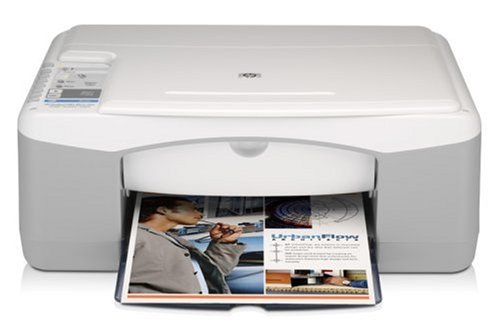
HP Deskjet F380 Ink Cartridge Error.

This is another techy post. I was printing a load of colour pictures when the printer suddenly stopped, displayed an "E" in the copy count window, lit the "cartridge" lamp next to the exclamation mark and opened a window on the lap-top screen with the words "Ink Cartridge Error" where the cartridges were displayed. Oh, dear!

I Googled the problem. Other people have had this problem. I use JET TEC H21 & H22 cartridges as they contain twice as much ink and are cheaper than HP H21 & H22 cartridges. They work really well, with no jet clogging when left unused in the printer for long periods of time. They give good ink coverage even when printing in Fast Draft mode.

Before throwing the F380 in the rubbish bin, I decided to replace both cartridges. I get my JET TEC H21 & H22 cartridges from inkraider.co.uk. The cartridges arrived the next day. Changing the H22 (colour) cartridge made no difference. Changing the H21 (black) cartridge cured the problem. The printer wasn't even using that cartridge when the fault occurred. I refitted the old H22 cartridge. It displayed as being full. I shall continue to use JET TEC cartridges, as this is the first time that I've had a problem with them in over a year of use.

It's interesting (to me) that a fault on one cartridge messed-up the operation of the other one even when the faulty cartridge was not being used. There's probably a short-circuit on an input/output line that's common to both cartridges.

So, don't throw the baby out with the bath water!

BlackBerry 9700 Headset Problem.

Blatant excuse to post the following video:-

But seriously, folks...

Nick, who cooks my Full English breakfasts in Henley-on-Thames, gave me his wife's BlackBerry Bold 9700 to look at, as it had an odd fault. With the headset plugged in, it worked fine. With the headset unplugged, the phone oscillated between using the internal loudspeaker and the headset socket about once a second, rendering the phone unusable.

After many hours of unsuccessful tinkering, I decided to take a look on Google to see if anybody else had successfully cracked the problem. I saw THIS. It appears to be a common problem with BlackBerrys, with lots of spam sites offering unlock codes to "fix" it.

Having upgraded the phone software from V5 to V6, the fault was still present. Therefore, it's not a software problem. Therefore, unlock codes won't fix it!

It's a hardware problem. It may be a design or a production problem, but the pull-up on the headset socket is too weak/has failed, resulting in the voltage on the headset present/not present control line falling towards "present" when the headset is not present. This may also be caused by moisture in the headset socket.

As the above control line interrupts the processor (as an instant response is required on plugging/unplugging the headset), there is major disruption to the phone's operation.

A fault like this is easily fixable by a reputable mobile phone repair shop. A resistor value change or solder joint rework is all that's required.

EDIT: As of 11th April 2012, Blogger is no longer compatible with the default BlackBerry browser. Basically, my BlackBerry is not working!

I am now using the Opera Mini browser. If I display emails
on the BlackBerry in plain text, I can open links using Opera Mini, which works O.K. with Blogger.

The Capacitive Bottom-fed Fat Monopole.

Alternative title:- Serendipity rules, O.K.

This post is not about an obese Polish person who has a huge appetite, lives alone and has to be fed anally. I know a hilarious suppository joke, but it's not really suitable for this blog.

Having stayed up all night reading nearly 800 comments on Jack Kruse: Neurosurgeon. Leptin Reset and Cold Thermogenesis. Controversy, I noticed Sean's comment about Antennas.

I designed antennas for 225MHz to 400MHz portable man-pack radios (also a 1GHz to 3GHz Ultra Wide Band monopole antenna). There were two existing man-pack antennas, affectionately known as "The Bird-cage" and "The Egg-whisk". Electrically they worked well, but they would both catch in branches when the radio was used in woods.

My mission (should I choose to accept it, which I did) was to design an antenna that had a good impedance match over 225MHz to 400MHz, a good gain and couldn't get caught in branches.

The reason why the original antennas were shaped like bird-cages and egg-whisks was because barrels and inverse cones give a better impedance match than a piece of wire. Don't ask me why. The answer is extremely complicated and even I don't understand it!

The antenna had to be a bottom-fed monopole (an antenna which is designed to work with a ground-plane) with a connector at the bottom which plugged into the radio's RF connector. The RF system impedance was the standard 50 ohms.

As fat cylinders give a better impedance match than thin cylinders (a wire being an extreme case of a thin cylinder), I went for the fattest cylinder that would be acceptable on a man-pack radio. I designed an impedance-matching transformer using one of THESE made out of THIS. I connected the transformer to the end of the fat cylinder and examined the impedance using a 8753C Network Analyzer (or even older model).

During some faffing-about, a wire snapped and I was amazed to see that the match to 50 ohms improved. This led to other improvements being made, resulting in the Capacitive Bottom-fed Fat Monopole. It was rugged, it couldn't get caught in branches and it had a high gain. You could even bash somebody over the head with it without breaking it. It worked well on field trials. There were two versions - a short one for covert use which had a lower gain and a longer one for normal use which had a higher gain.

I hope you found that interesting. It's nice (for me) to blog about stuff that I have qualifications in!

Smart meters.

I was chatting to Kerrie's mum the other day and she was worrying about Smart meters. These are utility (usually electric) meters that can communicate their readings via radio waves & the internet to the utility companies to allow them better control of their generation plant. She'd been surfing the internet and had found sites warning about cancer and other health problems caused by the radiation from Smart meters. These sites are creating fear, uncertainty and doubt in order to sell solutions to problems that don't exist. Oh, dear.

Warning! Radio Frequency (RF) engineering stuff:-

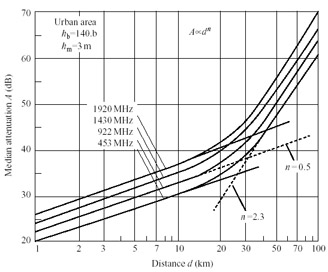
See the graph below?

The horizontal axis is incorrectly labelled. Distance (d) is in metres (m), not kilometres (km).

Trust me. I know what I'm talking about. I was an RF design engineer for 29 years. See my CV.

The vertical axis is path attenuation (loss) in decibels (dB).

Decibels 101: Power loss in dB = 10 x LOG10 of the loss as a fraction.

A power loss of down to One tenth = 10dB. One hundredth = 20dB. One thousandth = 30dB. One millionth = 60dB. One million millionth = 120dB. One half = 3dB. One quarter = 6dB. One eighth = 9dB. Got it?

Smart meters transmit at frequencies from 900MHz (Vodafone & O2) to 1.9GHz (Orange & T-mobile etc). I mentioned mobile phone networks, as people don't seem to mind having mobile phones glued to their ears for long periods of time.

If you stand 4 metres away (at the end of someone's garden path, say) from a Smart meter fitted to their house & operating at 900MHz, there's a path loss of 29dB. The RF energy reaching you is 1/800th of that emitted by the meter. Also, the meter doesn't produce RF energy all of the time. The duty cycle is 1% to 5% i.e. RF energy is only produced for 1/100th to 1/20th of the time.

In conclusion, even if you stand with your nose touching the glass window of a Smart meter, you get less RF radiation (RF radiation is Transverse Electromagnetic Radiation a.k.a. radio waves and not ionising radiation as from radioactive materials) than from your mobile phone.

Are you feeling reassured, now? My work here is done!